The short answer
Sort the permit and the new base two weeks out. The week before, empty the shed, have any wiring disconnected and work out how it is anchored. Then walk the route both ways and mark anything the truck must not cross, like a septic drainfield. On the day the shed goes on whole and comes off onto its rails at the new spot.
Not sure about any of it? Text a photo to (813) 422-0008 and ask before you book.
Two weeks out: the paperwork and the new spot
Check the permit
Florida's building code treats moving a structure the same as building one, and the size that gets a small shed out of a permit changes from place to place:
- City of Tampa: sheds up to 120 square feet are exempt, as long as the setbacks are met.
- Unincorporated Hillsborough: residential sheds under 150 square feet are exempt.
- Plant City: a kit or premanufactured shed of 150 square feet or less needs no permit, but every shed has to meet the setbacks and be anchored, and the city lists moving a structure as permitted work.
- Polk County and Lakeland: only closet-sized storage is exempt, so a normal garden shed needs a permit.
The permit is the property owner's, not the mover's. The detail is in do you need a permit to move a shed in Florida. If you have an HOA, check with them too.
Get the new base ready
Set a shed down on soft sand or fresh turf and it will not be level for long. The new spot needs to be firm and level before the day: a slab, compacted base, or blocks or pavers set level. Know where the property line is, because setbacks decide how close to it the shed can sit, and moving a shed twice costs twice.
Plan the anchoring
This is Florida, so the shed needs holding down at the new spot. Plant City requires every shed to be anchored, and Lakeland asks for the manufacturer's anchoring details with a shed permit. Have the anchors or tie-downs for the new spot sorted before the move, not after the first storm.
The week before: empty it and unhook it
- Empty it. Anything left inside slides around on the road and adds weight. If something cannot come out, say so when you ask for a price.
- Take down the shelves and hanging tools. Anything screwed to the walls that can move, should.
- Get the power disconnected. If the shed has wiring, have a licensed electrician disconnect it before the day. The same goes for a water line: have it shut off and capped.
- Know how it is held down. Straps, ground anchors or bolts into a slab: tell us which when you ask for a price, so the day is not spent finding out.
- Take off the loose bits. A gutter, a flower box, a ramp that is not built in: take them off or tie them up.
- Shut and latch the doors and windows. If a latch is weak, screw the door shut for the trip.
Walk the route
A shed on a deck is tall, and the clearance that matters is the lowest point anywhere between the old spot and the new one. Walk it from the shed to the street, and from the street to the new spot.
- Measure the shed at its peak and send that with the photos. In Florida a load can be 13 ft 6 in high without a permit, and that includes the deck it sits on. The hauling rules have the rest.
- Look up. Low live oak limbs, power and cable lines over the driveway, a carport roof.
- Check the width. The gate, the gap between the house and the fence, parked cars. If a fence panel has to come out, have it out before the truck arrives.
- Mark the septic. If you are on septic, mark the tank and the drainfield. The EPA's own advice is not to park or drive on a drainfield: the weight compacts the soil and damages the pipes.
- Mark the sprinkler heads and anything else in the grass that a tire would break.
- Look at the ground. After a week of rain, a lawn that is fine to walk on can be too soft for a loaded trailer. A photo of the ground helps.
On the day
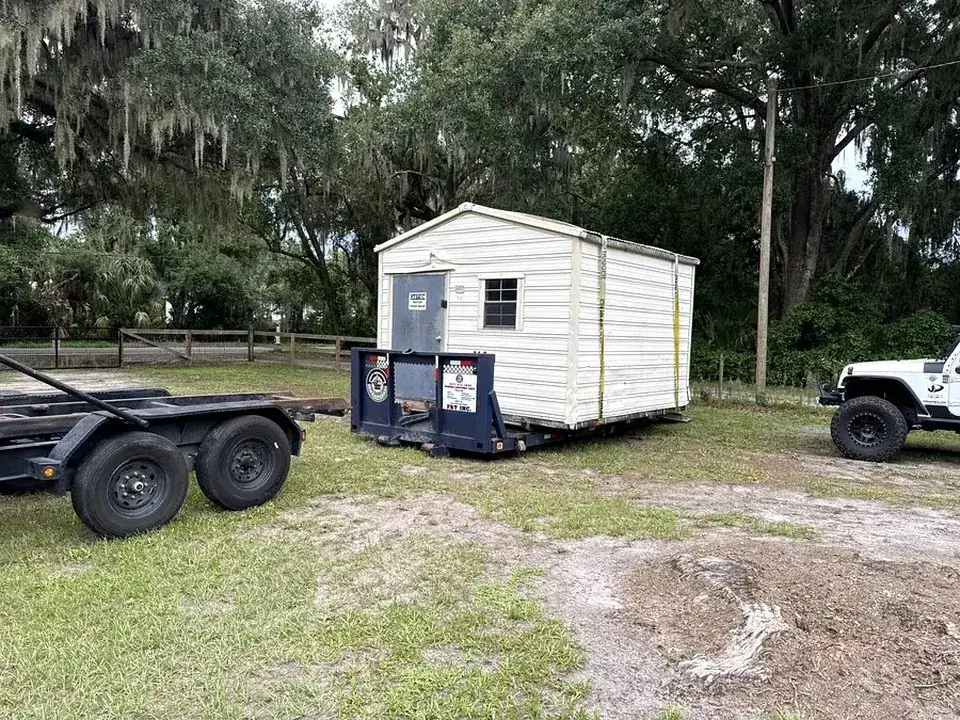
Move the cars and trailers and open the gates at both ends. Have someone there who knows where the shed goes and which way the door should face, and keep kids and pets well back while it is lifted and set down.
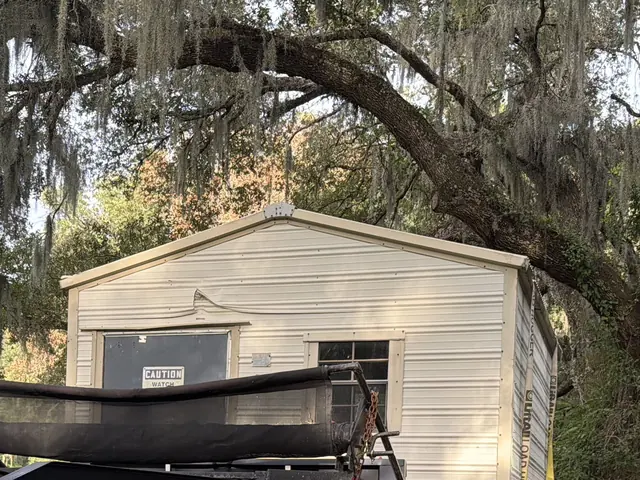
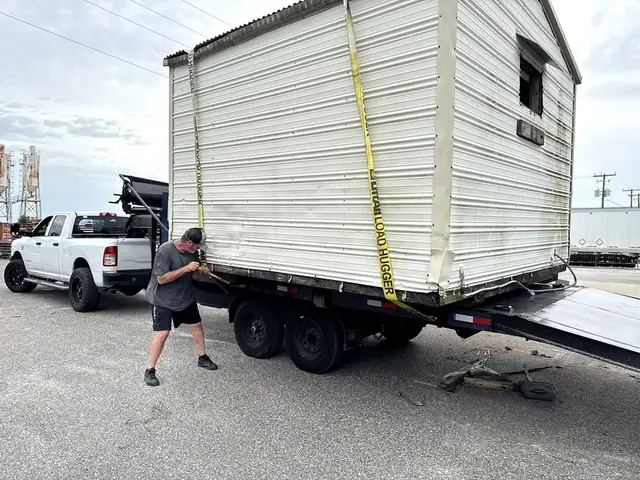
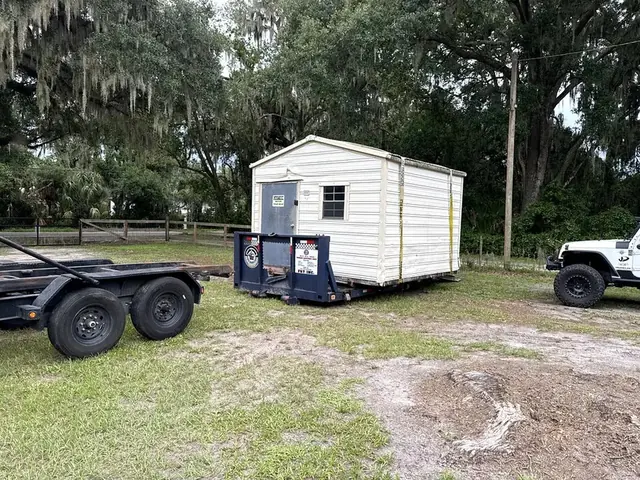
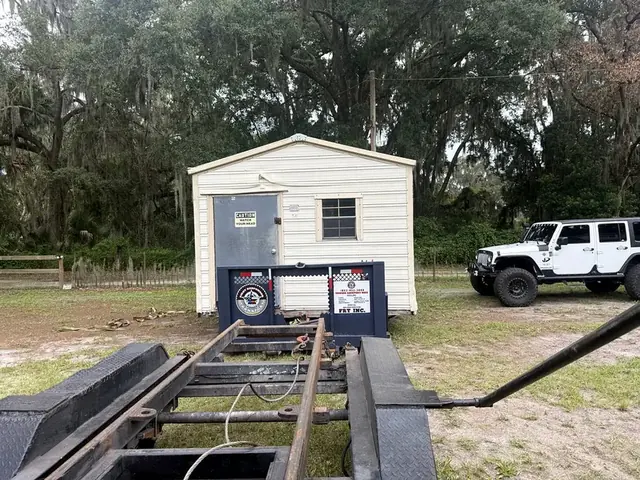
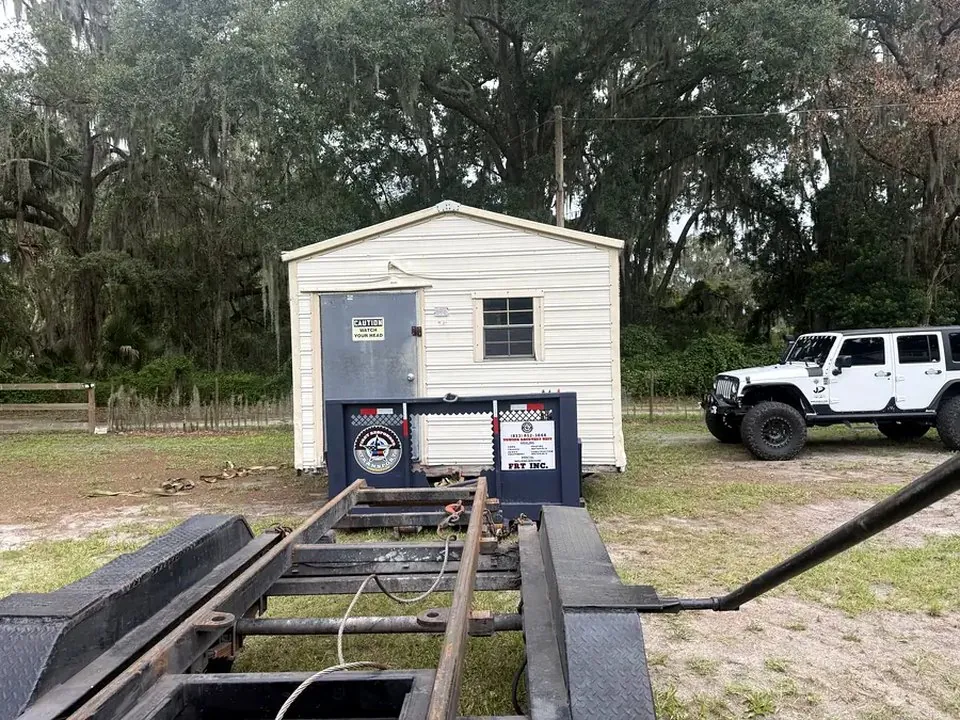
The shed goes on whole, strapped at the points that keep it square, and comes off onto its rails at the new spot.
Once it is down
- Anchor it to the plan you made for the new spot.
- Open and shut the doors. A shed that has racked out of square has doors that stick. If they swing clean, it came off square.
- Get the power reconnected by the electrician, if it had any.
- Check it after the first heavy rain. If the base was going to settle, that is when it shows.
- Close out the permit, if it needed one, with whatever inspection the building department asks for.
Questions people ask
Do I have to empty my shed before it is moved?
It is much better if you do. Anything left inside slides around on the road. If something cannot come out, say so when you ask for a price.
Do I need a permit to move a shed?
Often, yes. Florida's building code treats moving a structure like building one. Tampa exempts sheds up to 120 sq ft and unincorporated Hillsborough under 150 sq ft; Polk County and Lakeland only exempt closet-sized storage.
What should the new base be?
Firm and level before the day: a slab, compacted base, or blocks or pavers set level. Soft sand or fresh turf will settle.
How tall a shed can go on the road?
In Florida a load can be 13 ft 6 in high without a permit, including the trailer deck. Send the shed's height at its peak with the photos.
Can the truck drive over my septic drainfield?
It should not. The EPA's advice is not to park or drive on a drainfield. Mark the tank and the drainfield before the day.
Is the shed moved in one piece?
Yes. Sheds are moved whole, strapped down and set on their rails at the new spot.