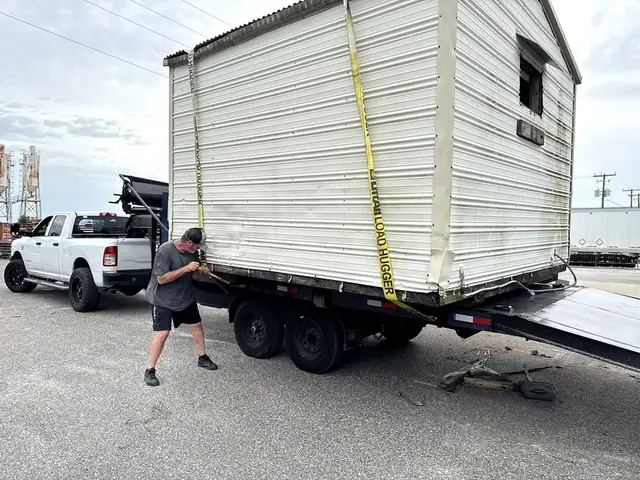
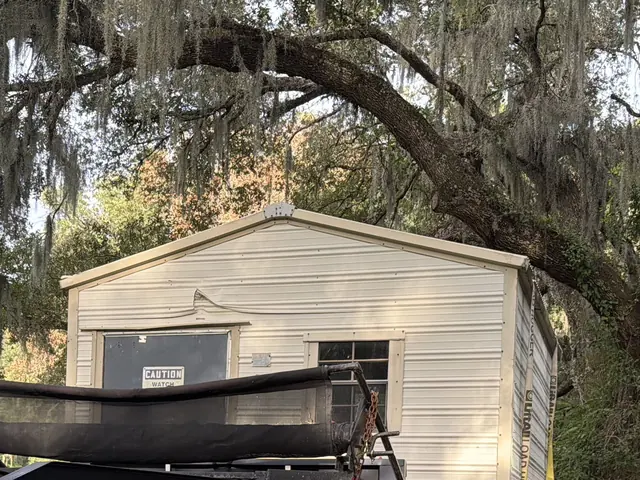
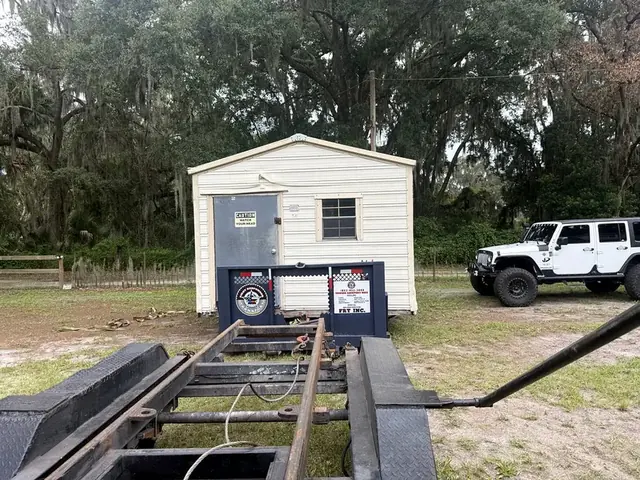
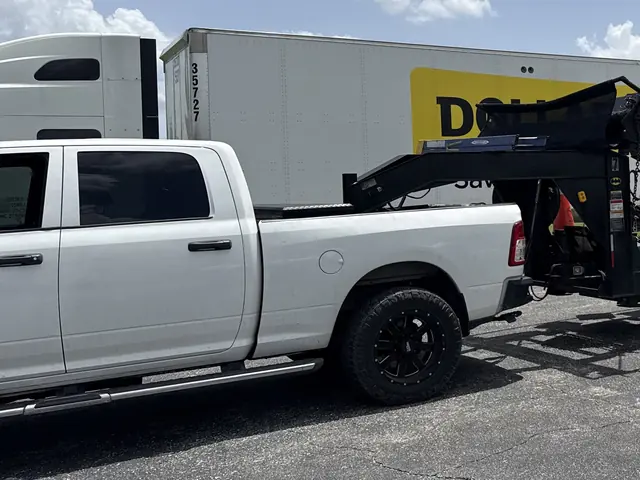
The short answer
Angi and HomeAdvisor both put a typical shed move at $200 to $1,000, with about $500 as the average, and HomeAdvisor says hard jobs reach $3,500. Those are national figures. In Florida the biggest single factor is width: any shed over 8 ft 6 in wide, roof overhang included, is an oversize load, and a 12 ft wide shed needs an escort vehicle.
First Responder Transport prices every move from photos. Text the shed, the way out and the way in to (813) 422-0008 and the number comes back agreed before the truck leaves.
What the cost guides say
| Source | What it says | Dated |
|---|---|---|
| Angi | $200 to $1,000; distance $1 to $2 a mile; permits $10 to $80 | July 2026 |
| HomeAdvisor | Average $500, most $200 to $1,000, difficult jobs up to $3,500 | June 2026 |
| Kauffman Structures | 6x8 to 8x10: $400 to $600. 10x12 to 12x16: $400 to $1,200. 12x20 and up: $800 to $2,500 | April 2026 |
| uShip | Local moves under 50 miles $400 to $500; hard terrain adds $200 to $500; taking a shed apart and rebuilding it $300 to $700 or more | October 2024 |
The ranges are wide because a shed move is three jobs: getting the shed onto the trailer, getting the trailer down the road, and setting the shed down level at the other end. Any one of them can be the expensive part.
Width: the Florida factor
Florida's legal width is 102 inches, 8 ft 6 in, and the measurement is of the load, so the roof overhang counts. Most 8 ft sheds with eaves and every 10 and 12 ft shed are oversize loads, and the rules step up with the width:
| Shed width, at the widest point | What the move needs |
|---|---|
| Up to 8 ft 6 in | Nothing extra |
| Over 8 ft 6 in, up to 10 ft | An oversize permit, corner flags, daytime moves only |
| Over 10 ft, up to 12 ft | All of that, plus an OVERSIZE LOAD sign and amber warning lights |
| Over 12 ft, up to 14 ft | All of that, plus an escort vehicle the whole way |
Height counts too. A load can be 13 ft 6 in high without a permit, measured from the road, so a tall shed on a trailer deck runs out of room sooner than people expect. Measure the shed at its peak and send that with the photos. The hauling rules have the detail.
Size, weight and distance
| Wood shed | Typical weight |
|---|---|
| 8x8 | 800 to 1,200 lb |
| 8x10 | 1,000 to 2,000 lb |
| 10x12 to 10x16 | 1,500 to 3,000 lb |
| 12x16 | About 2,000 lb |
| 12x24 | 5,000 to 6,000 lb |
Even a big wooden shed is a light load for a gooseneck, so weight rarely changes the permit. It changes how the shed comes off the ground and goes onto the deck, and that is time. Distance is the simple part: the cost guides put it at $1 to $2 a mile.
Access and the new spot
The things that turn a two-hour move into a day are almost always at the ends, not on the road:
- The way out. A gate narrower than the shed, a fence panel that has to come out, low live oak limbs, power lines over the drive.
- The ground. After a week of rain, a lawn that is fine to walk on can be too soft for a loaded trailer. A septic drainfield should not be driven on at all.
- The new base. The shed needs to come off onto something firm and level: a slab, a compacted pad, or blocks set level. Angi prices a gravel pad at $4 to $10 a square foot.
- The building permit. Florida's building code treats moving a structure like building one, and in Polk County and Lakeland a normal garden shed needs a permit at its new address. That is the property owner's, and do you need a permit to move a shed in Florida has each town's rule.
- Anchoring. A shed in Florida has to be held down at the new spot. Plant City requires it of every shed.
Getting a shed ready to move is the checklist for all of it, in the order it needs doing.
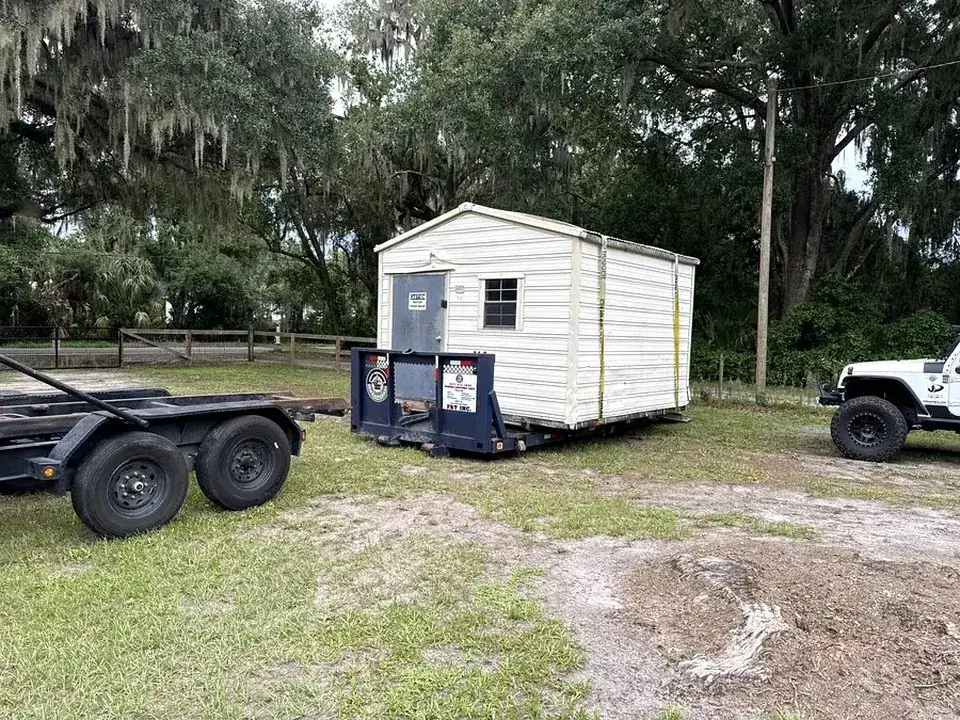
How we price a move
There is no flat rate on this site, because the four things above change from one yard to the next. Send these by text to (813) 422-0008:
- A photo of the shed, and its size: width, length and height at the peak.
- A photo of the way out: the gate, the gap, anything overhead.
- Both towns, or both addresses if it is staying on the same property.
- What it is sitting on now, and what it is going onto.
You get a real number back, usually inside the hour, and it is agreed before the truck leaves. Seven days a week. Moves run from Tampa, Plant City and Thonotosassa to Lakeland, Davenport and Bradenton, and across Hillsborough, Polk, Manatee, Lake and Orange counties.
Questions people ask
How much does it cost to move a shed?
Angi and HomeAdvisor put a typical move at $200 to $1,000, about $500 on average, with hard jobs up to $3,500. In Florida, width over 8 ft 6 in adds permits, flags and signs, and over 12 ft an escort.
Does a 10 by 12 shed need a permit to move on the road?
Usually, yes. It is 10 ft wide before the overhang, which is over Florida's 8 ft 6 in limit, so it needs an oversize permit, corner flags and a daytime move.
How much does a shed weigh?
Sellers' guides put a wooden 8x10 at roughly 1,000 to 2,000 lb and a 12x24 at 5,000 to 6,000 lb. Metal and resin sheds are lighter.
Is it cheaper to move a shed on the same property?
Usually. There is no road and no oversize permit, so the cost is in lifting it, the path across the yard and setting it down level.
Do I need a building permit after the shed is moved?
Often. Polk County and Lakeland exempt only closet-sized storage. Tampa exempts sheds up to 120 sq ft and unincorporated Hillsborough under 150 sq ft.
Can you give me a price over the phone?
From photos, yes, usually inside the hour. Text the shed, the way out and both towns to (813) 422-0008.